A will can take only a few minutes to create online, but the signing process can determine whether it works when your family needs it. Are online wills valid? Often, yes – but only when the document and the way it is executed meet the law of the state that applies to your estate.
That distinction matters. A polished document from a reputable website is not automatically a valid will. If signatures, witnesses, electronic-will rules, or state-specific requirements are missed, the document may be challenged or rejected in probate court. The result can be delay, added expense, and decisions made under intestacy laws instead of your instructions.
Are Online Wills Valid in the United States?
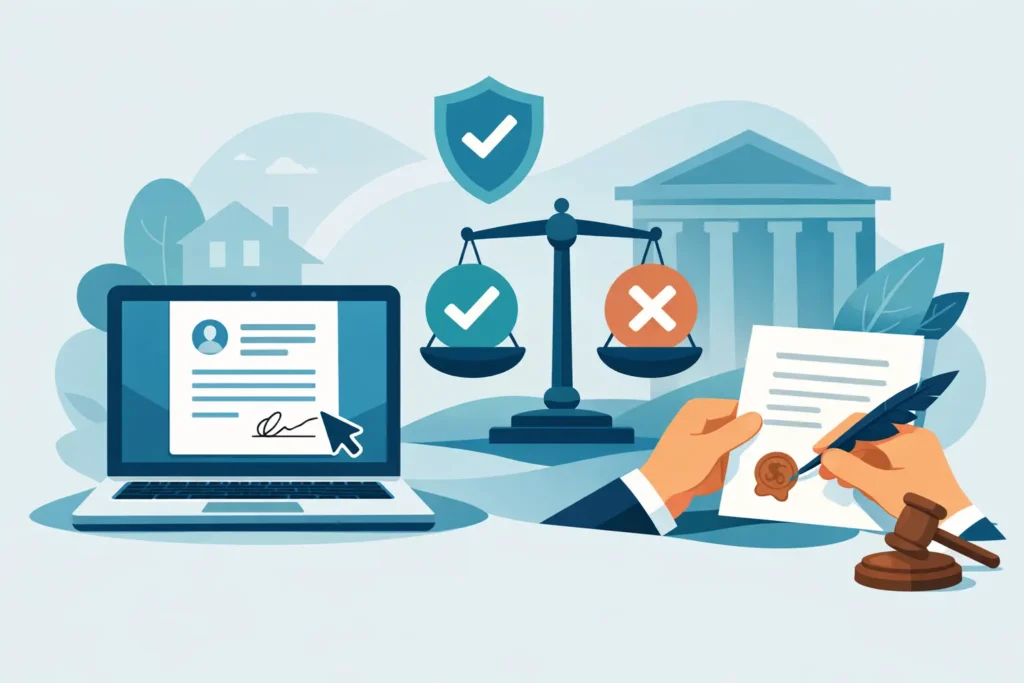
“Online will” can mean two very different things. The first is a will prepared through an online service, then printed and signed on paper. In most states, this can be valid if it is completed and witnessed correctly under state law.
The second is a fully electronic will, created, signed, witnessed, and stored digitally. Electronic wills are legally recognized in some states, but the rules are not uniform. A state may require electronic signatures, remote witnessing procedures, identity verification, audio-video technology, qualified custodians, or a particular way to store the original electronic record.
So the answer depends less on where the words were drafted and more on whether the will was legally executed. Generally, the law of the state where you live when you die has the strongest connection to probate. If you own property in another state or country, additional rules may apply.
What Usually Makes a Will Legally Valid?
A valid will is more than a list of who receives what. While details vary by state, most wills must show that the person making the will had legal capacity, intended the document to serve as a will, and signed it voluntarily.
The person must generally be an adult and understand, at a basic level, what property they have, who would normally inherit from them, and what the will does. They also must not be pressured, manipulated, or coerced into signing. Concerns about capacity or undue influence are common reasons a will is contested, particularly when it significantly changes a prior estate plan.
Most states also require witnesses. A common rule is two competent witnesses who sign the will in the required manner. The exact timing and presence rules matter. In some states, witnesses must be physically present when the person signs or acknowledges the signature. Other states permit certain remote procedures, but only if statutory conditions are followed.
A notary is usually not required to make a standard will valid. However, many states allow a will to be made “self-proving” through a notarized affidavit signed by the will-maker and witnesses. This affidavit can make probate easier because the court may not need to locate witnesses later to confirm the signing. It is useful, but it does not fix a will that was improperly witnessed in the first place.
The Most Common Problems With Online Wills
Online estate-planning tools can be practical for straightforward situations, but they cannot supervise your signing ceremony. That is where preventable mistakes happen.
One frequent problem is signing without witnesses or asking witnesses to sign later. Another is using a beneficiary as a witness. Some states allow this but may limit or complicate that beneficiary’s inheritance. The safest approach is usually to choose disinterested adult witnesses – people who are not named to receive property under the will.
A will can also create problems when someone changes it by crossing out language, handwriting new instructions, or replacing a page after signing. A change may require the same formalities as the original will. If you need to update your plan, a properly executed codicil or a new will is often safer than informal edits.
Fully digital documents present another issue. Saving a PDF, typing your name, or using an e-signature platform does not automatically create a valid electronic will. If your state has not authorized electronic wills, or if its process was not followed exactly, the file may not be accepted.
The original document matters, too. With a paper will, probate courts often want the original signed will. If only a copy can be found, the court may presume that the original was revoked unless there is evidence to the contrary. Store the signed original in a secure, accessible location, and make sure your executor knows where it is.
How to Sign an Online-Created Will Carefully
If you use an online service to prepare a will, treat execution as a legal process, not a final click. Before signing, confirm the requirements for your state and read the platform’s execution instructions closely.
Use this practical checklist:
- Print the final document if your state requires a paper will or if you are unsure whether electronic wills are permitted.
- Arrange for the required number of adult, disinterested witnesses to be present at the same time when possible.
- Sign only after the document is complete, with no blank spaces or missing pages.
- Have witnesses sign as instructed, and complete any self-proving affidavit before a notary if your state uses one.
- Keep the original in a safe place and tell your executor or another trusted person how to find it.
Do not assume a document is ready merely because the website marks it “complete.” State rules can change, and online services may not account for every fact pattern. A will created while living in one state may also need review after a move to another state.
When a DIY Online Will May Not Be Enough
An online will can be a reasonable starting point for an adult with a simple estate, clear beneficiaries, and uncomplicated family circumstances. But some situations call for personalized legal advice because the cost of a mistake can be much higher than the cost of planning correctly.
Consider speaking with an estate-planning attorney if you have young children, a blended family, a beneficiary with special needs, a business interest, substantial debt, real estate in more than one state, or property outside the United States. You should also get advice if you expect a family dispute, want to disinherit a close relative, have concerns about your own or a loved one’s capacity, or need to coordinate beneficiary designations with retirement accounts and life insurance.
A will does not control every asset. Accounts with named beneficiaries, payable-on-death accounts, jointly owned property, and assets held in a trust can pass outside the will. This is one reason a will that appears clear on its own may still fail to produce the intended outcome.
If an Online Will Is Invalid, What Happens?
When a court decides a will is invalid, it may look for an earlier valid will. If none exists, the estate may be distributed under the state’s intestacy laws. Those laws decide who inherits based on family relationships, not personal preference.
That can mean a spouse, children, parents, or other relatives receive assets in shares you did not intend. It can also leave the court to appoint an administrator and make decisions about the estate without the executor you selected. For families already managing grief, that uncertainty can turn routine paperwork into a long dispute.
A properly prepared online will may be legally valid, but it deserves the same care as any other estate document. Take the extra time to follow your state’s signing rules, use appropriate witnesses, protect the original, and seek legal guidance when your circumstances are not simple. That small amount of care can give the people you trust a much clearer path when they need it most.