A form may ask for a sworn statement, while a court filing, insurer, or government office asks for an affidavit. The sworn statement versus affidavit question matters because the words can be used loosely, but the signing requirements may be very specific. Using the wrong format, signing before you are instructed to, or appearing before the wrong official can cause avoidable delays.
For most people, the practical goal is simple: provide truthful information in the form requested, then complete the signing process correctly. The details depend on where the document will be filed, who issued it, and whether it will be used in the United States, Canada, or another country.
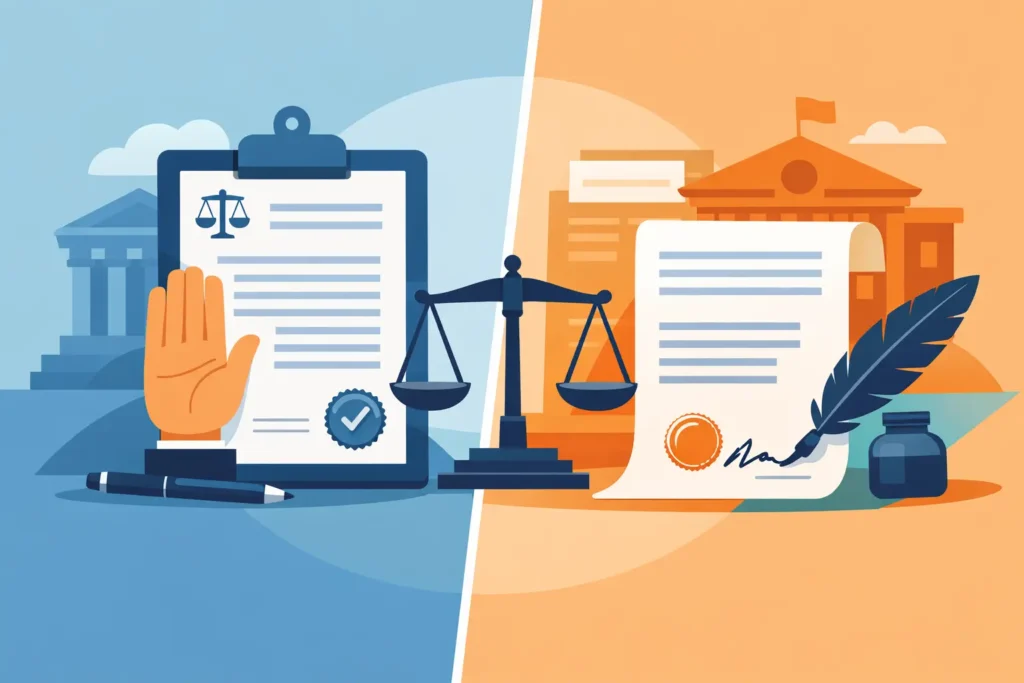
Sworn Statement Versus Affidavit: The Core Difference
An affidavit is a written statement of facts that the person making it swears or affirms is true in front of an authorized official. That official may be a notary public, commissioner for oaths, court clerk, or another person permitted under the applicable law. The person signing the affidavit is often called the affiant or deponent.
A sworn statement is a broader term. It can refer to a written statement made under oath or affirmation, but it can also describe a statement provided in other formal settings. A police report, insurance declaration, employment investigation, or immigration matter may use the phrase “sworn statement” even when the document does not look like a traditional affidavit.
The key point is that an affidavit is usually a type of sworn statement, but not every document called a sworn statement follows the same affidavit format. In some situations, the two terms are treated as interchangeable. In others, the receiving agency has distinct rules about the wording, certificate, witness, and authorized official.
Do not rely on the document title alone. Read the signing instructions and confirm what the receiving party requires.
What Makes an Affidavit Valid?
An affidavit generally has three essential parts: the written facts, the affiant’s signature, and a completed jurat or oath certificate from the authorized official. The jurat confirms that the affiant personally appeared, was properly identified, and swore or affirmed that the contents were true.
The affidavit should state facts the signer personally knows. For example, a person may swear that they lived at a particular address, witnessed an event, received a document, or are the legal owner of certain property. Opinions, assumptions, and secondhand information can weaken an affidavit, especially if it will be filed in court.
The oath is not a formality. By swearing, the signer makes a serious legal declaration about the truthfulness of the document. An affirmation serves the same legal purpose for someone who prefers not to take a religious oath. In either case, false statements can have significant legal consequences, including perjury-related consequences where applicable.
The official witnessing the signature is not confirming that every fact is true. A notary or commissioner generally verifies the signer’s identity, ensures the signer appears willing and aware, administers the oath or affirmation when required, and completes the notarial certificate. The signer remains responsible for the content.
The wording on the certificate matters
A proper affidavit normally includes language indicating it was “sworn” or “affirmed” before the official on a particular date and in a particular location. This is different from a simple acknowledgment, where a signer confirms that they signed a document voluntarily but does not swear to its truth.
That difference is easy to miss. A document requiring an affidavit should not receive an acknowledgment certificate unless the requesting organization specifically says that is acceptable. Likewise, a document that only needs a signature acknowledgment may not require an oath at all.
When a Sworn Statement Is Not an Affidavit
Some documents are signed under penalty of perjury without an in-person oath. In the United States, certain federal forms and state-specific declarations allow a signer to certify truthfulness using prescribed language. These are often called declarations rather than affidavits.
A statutory declaration is another separate category, commonly used in Canada. It is a written statement declared to be true before an authorized official, but it is not technically an affidavit because it is made by solemn declaration rather than oath or affirmation. The distinction can matter when a court, government department, or foreign authority specifically requests one document type.
There are also sworn statements prepared for insurers, law enforcement, employers, schools, and financial institutions. Some require notarization, some require a witness, and others simply require the signer’s certification. Their validity comes from the rules of the organization receiving them, not from a universal template.
If a form says “sworn statement,” look for instructions such as “must be notarized,” “signed under penalty of perjury,” “witness required,” or “sworn before a commissioner.” Those instructions tell you far more than the title does.
Choosing the Right Document for Your Situation
Start with the organization that requested the document. A court clerk, attorney, title company, government office, bank, or insurer may provide a required form or specific language. Use that form whenever possible. Replacing it with a generic affidavit can create problems, even if the facts are accurate.
An affidavit is often appropriate for court-related filings, estate matters, proof of service, identity or name issues, real estate matters, and factual statements supporting an application. A sworn statement may be requested for an internal investigation, insurance claim, travel consent issue, immigration file, or administrative process.
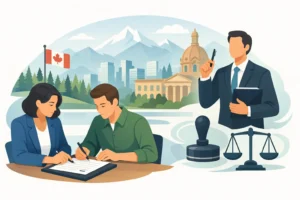
It depends on the jurisdiction as well. A document for a U.S. state may need a notarial act permitted in that state, while an Alberta document may require a commissioner for oaths or notary public. A document intended for use abroad can require additional authentication after notarization. The country receiving the document may also have its own format, translation, apostille, or legalization requirements.
For cross-border paperwork, confirm the destination authority’s instructions before booking an appointment. A correctly notarized document can still be rejected if it was notarized in the wrong jurisdiction or lacks the required authentication steps.
How to Prepare Before You Sign
Preparation saves time and prevents a second appointment. Complete the document as fully as possible, but do not sign it in advance if it needs to be sworn, affirmed, witnessed, or notarized in the official’s presence. Bring the unsigned original, any attached exhibits, and valid government-issued photo identification.
Review dates, names, addresses, and reference numbers carefully. If the affidavit refers to an attachment, label and attach it before the appointment. An exhibit mentioned in the body of an affidavit but missing from the final package can create a filing problem.
Be ready to state that the contents are true to the best of your knowledge. If you do not understand a statement, do not sign until it is clarified. A notary or commissioner can explain the signing process, but cannot provide legal advice or tell you what facts to include in a legal filing.
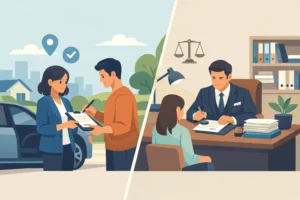
For a mobile appointment, choose a location where the signer can review and sign privately and where original identification is available. This is especially useful for hospital visits, busy offices, homes, or urgent last-minute document needs.
Common Mistakes That Delay Documents
The most common issue is pre-signing a document that requires the signer to appear before an official. Other frequent problems include bringing expired identification, leaving blanks in important sections, using an acknowledgment when an oath is required, or asking an official to certify facts they did not witness.
Another mistake is assuming all notarizations are accepted everywhere. Notarial authority and document authentication rules vary by jurisdiction. If a document is headed to another state or country, ask the recipient exactly what certificate and follow-up authentication they need.
Finally, do not treat an affidavit as a persuasive story. Keep it factual, organized, and limited to information you can honestly swear or affirm. If the document will be used in litigation, family law, estate administration, or a contested business matter, legal advice may be appropriate before signing.
Get the Signing Process Right the First Time
When time is tight, the right service is the one that matches the document’s actual requirements. Notary2U helps clients in Calgary and across Alberta complete affidavits, sworn statements, statutory declarations, and related document services with mobile and in-office appointment options, including urgent scheduling when available.
Bring the requesting party’s instructions, your unsigned document, and valid identification. A few minutes spent confirming whether you need an affidavit, a sworn statement, a declaration, or a simple acknowledgment can protect a much more important deadline.