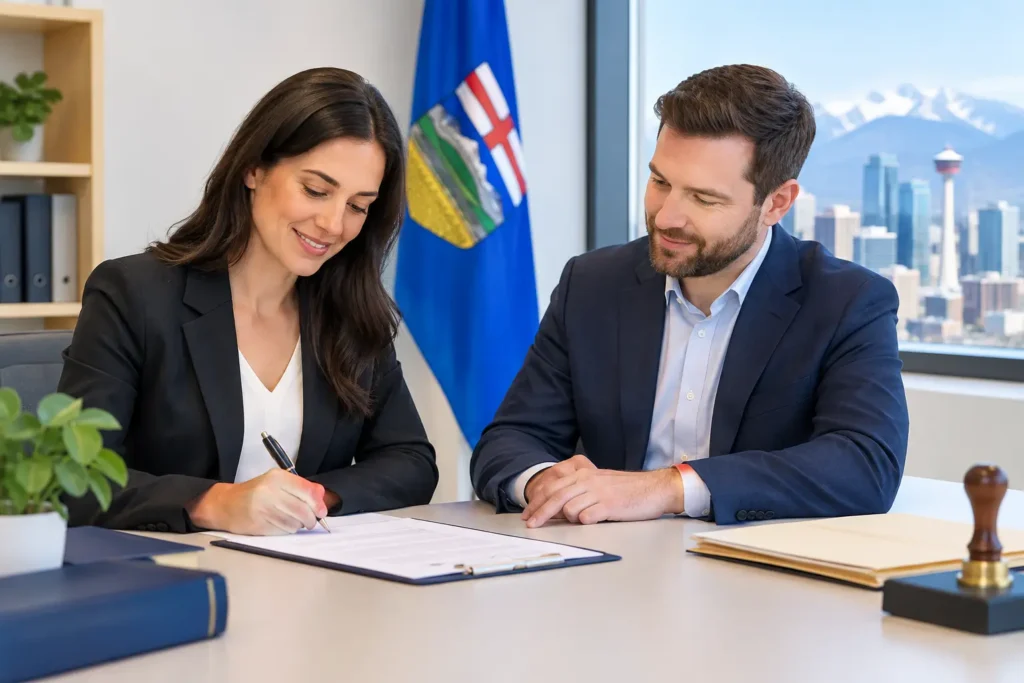
A missing witness signature can turn a finished document into a problem at the worst possible moment: when a parent is hospitalized, a home transaction is closing, or travel is only days away. The top documents needing witnessing do not all follow the same rules. Some need independent adult witnesses, some must be signed in front of a commissioner, and some may need notarization or authentication for use outside Canada.
The practical rule is simple: do not sign first and ask questions later. Review the document’s signing instructions, confirm who may act as a witness, and bring valid government-issued photo ID. If the document has cross-border, estate, real estate, or court implications, getting the execution right the first time saves far more than it costs.
Top Documents Needing Witnessing in Alberta
Wills
A will is one of the most consequential documents to witness correctly. In Alberta, a standard formal will generally requires the will-maker to sign in the presence of two witnesses who are present at the same time. The witnesses then sign while the will-maker is present.
A common mistake is asking a beneficiary, or the beneficiary’s spouse, to witness the will. That can create serious issues with the gift intended for that person, even if the rest of the will remains valid. The safer choice is to use two adults who are not named in the will and have no personal interest in its contents.
Witnesses are confirming the signing process, not approving the terms of the will or deciding whether they are fair. Still, they should be able to observe that the person signing appears to understand what they are doing and is signing voluntarily. If capacity could later be questioned, clear execution procedures matter even more.
Enduring Powers of Attorney
An enduring power of attorney lets a person appoint an attorney to manage financial and property decisions if they become unable to do so. It is often prepared alongside a will, but it is used during the person’s lifetime.
In Alberta, the signing and witnessing requirements for an enduring power of attorney are specific. The document must be executed correctly for banks, land titles offices, financial institutions, and other organizations to rely on it when it is needed. Witness restrictions may apply, so the appointed attorney and people closely connected to that attorney are not always appropriate choices.
Because this document can authorize major financial decisions, do not treat the witness line as a formality. Confirm the form is appropriate for Alberta, ensure all pages are complete, and make sure the correct people sign in the correct order. A mobile appointment can be especially helpful when the person signing is at home, in a care facility, or in the hospital.
Personal Directives and Health Care Documents
A personal directive allows an adult to name an agent to make personal and health-related decisions if they lose capacity. It can address living arrangements, personal care, treatment preferences, and other non-financial decisions.
Like a power of attorney, a personal directive must be signed and witnessed in accordance with Alberta requirements. The person selected as agent may face restrictions on acting as the witness. Using an independent witness helps avoid questions later, particularly when family members disagree about health care decisions.
Health care forms from another province or U.S. state deserve extra care. A document may be valid where it was created but still cause hesitation for an Alberta hospital or care provider if its wording, witnessing, or appointment language is unclear. If you are managing cross-border family matters, verify the receiving organization’s requirements before signing.
Affidavits and Statutory Declarations
Affidavits and statutory declarations are frequently described as documents that need witnessing, but they require something more precise. An affidavit is sworn or affirmed before an authorized official, such as a commissioner for oaths or notary public. A statutory declaration is declared before an authorized official in a similar way.
The official is not merely watching you sign. They administer the oath, affirmation, or declaration and complete the jurat or declaration section. Signing an affidavit in advance can mean it must be signed again in the official’s presence.
These documents are common in court filings, insurance claims, government applications, proof-of-loss matters, immigration files, and business records. Bring the completed document without signing it, along with identification. Also bring any exhibits that need to be attached, labeled, and referenced in the affidavit.
Travel Consent Letters for Children
When a child travels without one or both parents or legal guardians, a consent letter can reduce delays at the border and satisfy requirements set by airlines, cruise lines, schools, or destination countries. Although a simple consent letter may not always be legally required to be notarized, an independently witnessed or notarized letter is often more credible when officials need reassurance that consent is genuine.
The letter should identify the child, travel dates, destination, accompanying adult, contact details, and the parent or guardian providing consent. Supporting documents, such as custody orders or a copy of identification, may also be useful depending on the situation.
Travel requirements change by country and carrier. A notarized consent letter does not replace a passport, visa, custody authorization, or other required travel document. It does, however, provide a stronger record when consent needs to be shown quickly.
Real Estate and Land Title Documents
Real estate paperwork can involve witnessing, commissioning, identity verification, and strict land title requirements. Transfers, affidavits of execution, mortgage-related documents, declarations, and supporting statements may each have their own execution instructions.
This is not an area for assumptions. A witness who is acceptable for a private agreement may not satisfy a land title or lender requirement. In some cases, a lawyer, notary, commissioner, or other authorized professional must complete a particular certificate. In others, the document must be signed in the presence of a specific person and supported by identification.
If a document is connected to a sale, refinance, title change, estate transfer, or property outside Alberta, ask the receiving party exactly what is required before booking. One rejected signature can delay registration, funding, or closing.
Separation Agreements and Family Law Forms
Separation agreements often include witness blocks because the parties are entering into a binding contract about parenting, support, property, debts, or other family matters. Witnessing may help establish that each person signed voluntarily, but it does not make an unfair agreement legally sound or replace independent legal advice.
The same caution applies to many family law forms, court affidavits, and consent documents. Some require commissioning rather than ordinary witnessing. Some must be filed by a deadline or served on another party using approved methods. A properly witnessed signature is only one part of a document that must be completed correctly.
Business Agreements and Corporate Records
Many business contracts do not legally require a witness, but having one can be useful when the agreement involves significant money, ownership changes, guarantees, shareholder arrangements, or long-term obligations. A witness can help prove who signed and when if the agreement is challenged later.
Corporate resolutions, banking documents, annual records, and documents for foreign use may also contain specific signing requirements. Some organizations require a notary’s seal, a certified true copy, or further authentication rather than a standard witness signature. The instructions on the form and the requirements of the receiving institution control.
Choosing the Right Witness
A reliable witness is an adult who is present for the signature, understands they are witnessing the act of signing, and can later identify the signer if necessary. The witness should not sign before the person whose signature they are witnessing.
Independence matters. Avoid using someone who benefits under the document, has a conflict of interest, or is specifically prohibited by the governing law. For estate planning and health care documents, choosing an uninvolved adult is usually the safest approach.
A witness also needs to be physically present unless the governing law clearly allows another method. Video calls, scanned signatures, and electronic signing platforms can be useful, but they do not automatically satisfy witnessing laws. Requirements vary by document type, location, and receiving organization.
When You Need More Than a Witness
Witnessing, commissioning, notarization, certification, and apostille services are related but different. A witness observes a signature. A commissioner for oaths administers an oath, affirmation, or declaration for eligible documents. A notary public may notarize certain documents, certify copies where appropriate, and assist with documents intended for another jurisdiction.
For international paperwork, the destination country may require notarization followed by an apostille or additional authentication. For U.S. documents, the requesting agency may specify a notarial certificate or wording that differs from a Canadian form. Never rely on a general assumption that any stamp will work.
Notary2U helps clients coordinate mobile and in-office document support across Calgary and Alberta, including urgent commissioning, notarization, and cross-border document needs. Before the appointment, confirm the document type, signing instructions, number of witnesses needed, and whether the recipient has requested a particular certificate.
Before anyone signs, pause long enough to check the execution page. The right witness, the right order of signatures, and the right professional at the table can keep an important document from becoming an expensive delay.