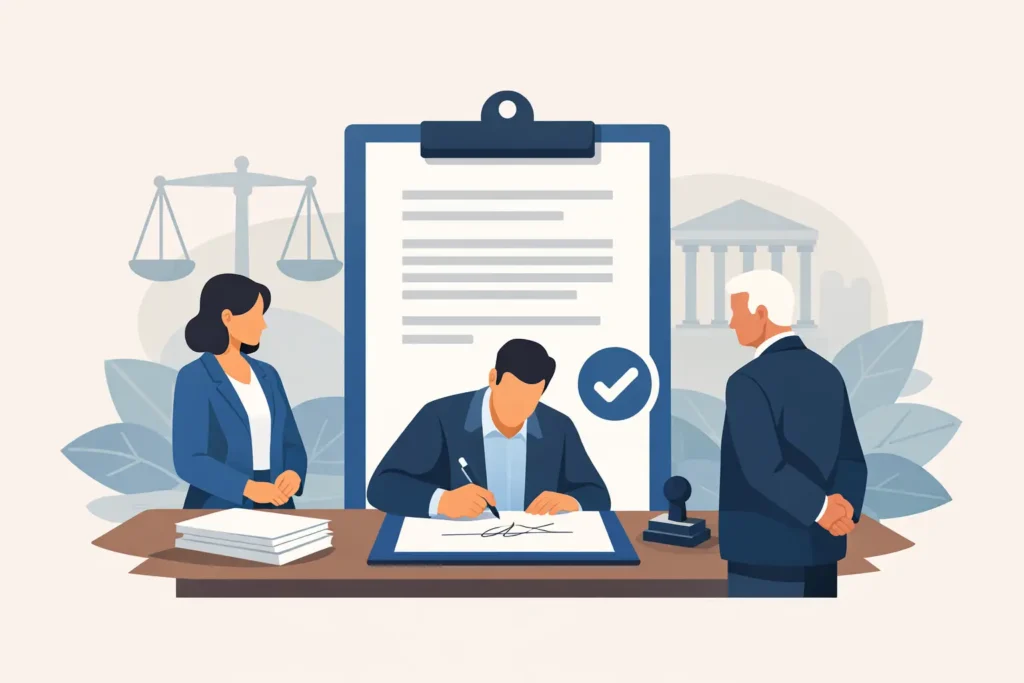
A signed document can still be rejected if the wrong person witnessed it, the witness signed at the wrong time, or a required notarial certificate is missing. Document witnessing requirements are not a formality to handle after the fact. They are part of what makes many legal, financial, estate, and travel documents acceptable to the organization receiving them.
Whether you are signing a power of attorney, affidavit, consent letter, estate document, or cross-border form, the safest approach is to confirm the rules before anyone puts pen to paper. Small execution errors can mean starting over, rescheduling everyone involved, or missing a filing deadline.
What are document witnessing requirements?
Document witnessing requirements are the rules that determine whether a document needs one or more witnesses, who may serve as a witness, and how the signing must take place. The exact rules depend on the document type, the jurisdiction that governs it, and sometimes the receiving institution’s own policies.
In a typical signing, a witness is present to observe the signer execute the document. The witness then signs to confirm that they saw the signature and, in some cases, that the signer appeared to understand what they were signing and acted voluntarily. A witness does not usually verify the legal accuracy of the document or give legal advice. Their role is to confirm the signing event.
That sounds simple, but requirements vary widely. A bank may accept a document that a land registry, court, retirement-plan administrator, or foreign authority will not. Do not assume the rules for one form apply to another.
Witnessing is not the same as notarization
Many people use the terms interchangeably, but witnessing and notarization are different services.
A witness observes a signature and signs the document as a witness. A notary public verifies the signer’s identity, assesses willingness and awareness, completes a notarial certificate, and applies their signature and seal where authorized. Depending on the document and jurisdiction, you may need a witness, a notary, both, or neither.
For example, an affidavit generally requires a sworn or affirmed statement before an authorized official, not just a witness signature. A power of attorney may require witnesses and may also need notarization to be accepted by a bank, title office, or institution. Some real estate, international, and government documents have prescribed signing blocks that must be followed exactly.
If a form says “signed in the presence of a notary,” bringing a friend as a witness will not meet the requirement. If it says “two independent witnesses,” a notarial seal alone may not replace those two signatures. Read the execution section carefully before booking or gathering witnesses.
Who can witness a document?
A suitable witness is often an adult who is mentally capable, present for the signing, and not receiving a benefit from the document. However, “often” is not the same as “always.” The document’s governing law may impose stricter standards.
For estate planning documents, witnesses commonly must be disinterested. That means they should not be named as beneficiaries or be the spouse of a beneficiary. Using an interested witness can create avoidable disputes or affect the gift intended for that person.
For powers of attorney, health care directives, and personal care documents, rules may exclude certain relatives, caregivers, attorneys-in-fact, agents, beneficiaries, or staff at a care facility. In hospital or long-term-care settings, additional safeguards may apply because capacity and undue influence can become concerns.
For business documents, the witness may need to be independent from the transaction. For some corporate forms, the signer may need to demonstrate authority to sign on behalf of the company, which is separate from having the signature witnessed.
Before choosing a witness, check these practical questions:
- Is the witness at least the required age under the governing rules?
- Will the witness be physically present when the signer signs?
- Is the witness independent, rather than a beneficiary, agent, or party who gains from the document?
- Can the witness provide their full legal name, address, and contact information if the form requires it?
- Does the receiving organization require a specific type of official, such as a notary public or commissioner for oaths?
When in doubt, use a neutral adult witness and confirm the document instructions. It is much easier to choose the right witness before signing than to repair an improperly executed document later.
The signing sequence matters
Even eligible witnesses can invalidate the process if the signing sequence is wrong. In many cases, the signer and witness must be together when the signature is made. The witness should see the signer sign, or the signer should personally acknowledge that the signature is theirs while the witness is present. The witness then signs right away.
Do not pre-sign documents and ask someone to witness them later unless the document instructions and governing law clearly allow acknowledgment after signing. Do not leave blank pages, dates, names, or key terms to complete later. Alterations made after witnessing can raise questions about whether the witness observed the final document.
Use the full legal name shown on government-issued identification. Date the document correctly, and make sure every required signature line is completed. If there are multiple signers, verify whether each signer needs separate witnesses or whether the same witnesses may observe all signatures.
This is especially relevant for mobile appointments. If family members, business partners, or elderly parents are signing at different locations or different times, the witness arrangement may need to be planned around each signing event.
Identification, capacity, and willingness
A valid signature is more than ink on paper. The person witnessing or notarizing the document may need to be satisfied that the signer is the person named in the document and understands the nature of what they are signing.
Bring current, government-issued photo identification whenever possible. If a name has changed due to marriage, divorce, or another reason, bring supporting documents if the names on the ID and paperwork do not match. A mismatch may be easy to explain, but it should be addressed before the signing begins.
Capacity and willingness also matter. A person should not be pressured, coached, or forced to sign. If there are questions about whether someone understands the document, a professional may need to speak with the signer privately. A notary or commissioner may decline the appointment if the signer appears unable to understand the process or is being improperly influenced.
This can feel inconvenient in an urgent situation, but it protects the signer and the document. A rushed signature that later becomes disputed is far more difficult to deal with than a careful appointment.
Common documents with special rules
Some documents deserve extra attention because they are frequently rejected or challenged.
Wills and estate documents
Wills commonly require two witnesses, and witness eligibility can be strict. Beneficiaries and their spouses are often poor choices. Requirements may differ for handwritten wills, formal wills, codicils, and documents signed outside the jurisdiction where probate will occur.
Powers of attorney and health care documents
These documents can give another person significant authority. They may require one or two independent witnesses, and some jurisdictions restrict who can act as a witness. Banks and medical providers may also have their own acceptance standards, even when the document is legally valid.
Affidavits and sworn statements
An affidavit is generally signed under oath or affirmation before an authorized official. The official must administer the oath or affirmation and complete the jurat or certification section. A regular witness is not a substitute for this process.
Documents for use abroad
International documents may need notarization, authentication, apostille processing, certified translation, or consular legalization. The country where the document will be used determines the requirements. Sign first only when you know the full document chain, because some authorities will reject documents that were notarized or certified in the wrong format.
How to prepare for a smooth witnessing appointment
Start by sending or reviewing the complete, unsigned document. Look for instructions near the signature page, but also check the first pages and any attached schedules. Some forms state their witness rules in fine print or in a separate execution clause.
Have every signer attend with proper ID. Arrange qualified witnesses in advance if they are needed, and make sure they can stay until all signing steps are complete. If the document requires an oath, a notarial certificate, or multiple originals, say so before the appointment.
For time-sensitive matters, mobile service can prevent a simple logistics problem from delaying an important filing. Notary2U can help clients coordinate notarial and commissioner for oaths services at a home, office, hospital, or other convenient location, including support for many cross-border document needs. The key is to provide the document details early so the correct signing process can be arranged.
Do not treat a witness signature as a checkbox. Give the document the same care you would give the transaction, family decision, or legal matter behind it. A few minutes of preparation can help ensure the people and institutions relying on your paperwork can accept it when it matters most.