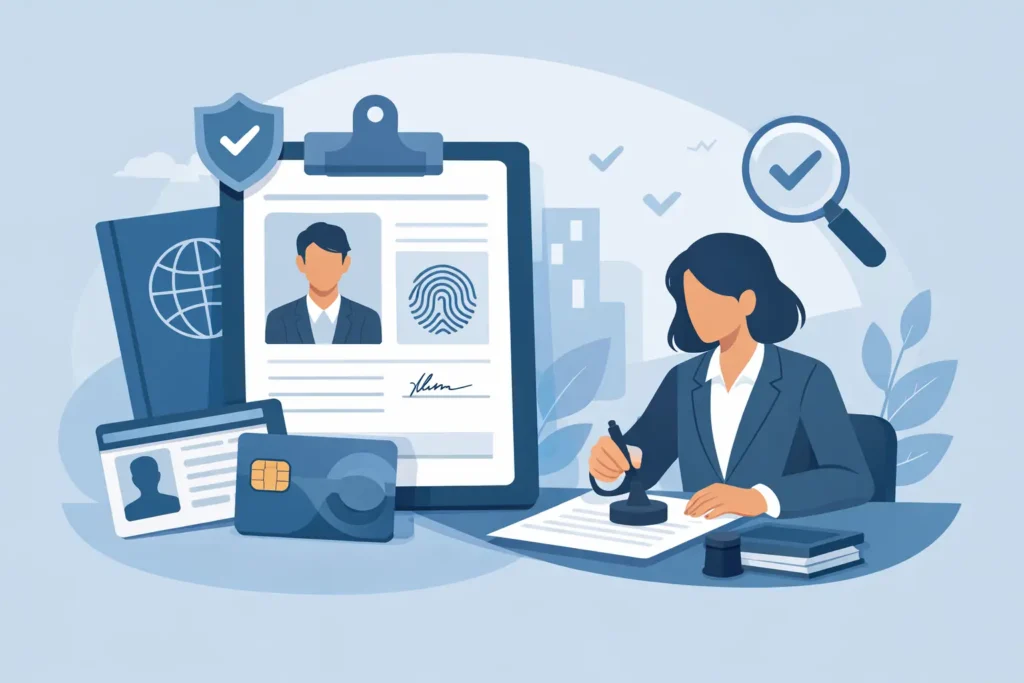
A notarization can stop before it starts if the signer arrives with the wrong ID. If you are asking, “what identification does a notary need?” the practical answer is usually a current, government-issued photo ID that allows the notary to confidently confirm who you are. Bring it with you before the document is signed, not afterward.
For most personal and business documents, identification is the fastest part of the appointment when it is prepared properly. The notary reviews the ID, confirms that the person signing matches the photo and document name, and records the required details in the notarial record. This protects you, the other parties relying on the document, and the integrity of the transaction. BOOK Notary Services NOW
What Identification Does a Notary Need From a Signer?
A notary needs satisfactory evidence of the signer’s identity. In most cases, that means an original, valid government-issued photo ID with a clear photograph, signature, and identifying details. A photocopy, a photo of an ID on a phone, or an expired card may not be enough.
For appointments in Alberta, a current driver’s license, passport, or provincial or territorial photo identification card will usually meet the requirement. Other official photo identification may be acceptable depending on the document, the issuing authority, and whether the notary can reasonably verify your identity.
If your document is being used in the United States or another country, the destination may have its own requirements for notarization, authentication, or apostille processing. The ID used to identify you is only one part of the process. The wording on the document, the type of notarial certificate, and any follow-up authentication can matter just as much.
The best IDs to bring
Bring your strongest, most current form of identification. A valid passport is often the most broadly accepted option, especially for cross-border, immigration, travel, or international document matters. A current driver’s license is commonly accepted for everyday affidavits, declarations, consent forms, powers of attorney, and business documents.
The following are commonly useful forms of ID:
- A valid passport issued by your country of citizenship
- A current driver’s license issued by a province, territory, or U.S. state
- A current provincial, territorial, or state photo identification card
- A government-issued permanent resident card or other official photo identity document
The key word is current. Even a familiar ID may be rejected if it is expired, damaged, altered, or too worn for the photograph and security features to be read clearly.
Why a Notary Cannot Simply Take Your Word for It
Notarization is more than watching a signature. The notary must be satisfied that the person signing is the person named in the document and that the signature is being made willingly. Verifying identity helps prevent fraud, impersonation, forged transfers, and disputes over whether a document was properly executed.
This matters most when the document carries financial, legal, or personal consequences. A power of attorney may give someone authority over property or banking. A travel consent letter may affect a child’s ability to cross a border. An affidavit may be relied on in court, by an insurer, or by a government office. A careful ID check is not a delay tactic. It is part of making the document dependable when it is needed.
A notary may also ask you to confirm your address, occupation, or the purpose of the document if those details appear in the paperwork or are required for the notarial record. These questions are routine and do not mean there is a problem with your signing.
Can You Use Expired Identification?
Usually, you should not assume an expired ID will be accepted. An expired driver’s license or passport may still show your name and photo, but it no longer proves that the issuing government considers it valid identification. Some circumstances and jurisdictions allow discretion, but a signer should not plan an important appointment around an exception.
If your ID recently expired, bring a second current government-issued photo ID if you have one. If you have already renewed it but have not received the physical card, ask in advance whether the temporary document and your old card can be considered together. The answer depends on the document, local notarial rules, and the quality of the available proof.
Do not wait until the document is on the table to raise an ID issue. A quick check before a same-day appointment can prevent a wasted trip, a missed filing deadline, or a closing that has to be rescheduled.
What If You Do Not Have Photo ID?
This is where the answer becomes more fact-specific. A person without acceptable photo ID may sometimes be identified through a credible witness or another legally permitted method. A credible witness is someone who personally knows the signer, can present acceptable identification, and can truthfully confirm the signer’s identity under oath or affirmation.
Not every document, notary, or jurisdiction permits this approach. It may be unsuitable for documents involving land, banking, estates, international use, or a party that has set its own strict identification rules. A credible witness is not simply a friend who came along. They must meet the applicable legal standard, and the notary must be satisfied that the process is appropriate.
If you lack ID because of hospitalization, age, disability, theft, or an urgent family situation, explain the circumstances before scheduling. Mobile service can make the location easier, but it does not remove the need to establish identity correctly. Early communication gives the notary time to assess whether another lawful option is available.
Make Sure the Name on Your ID Matches the Document
A valid photo ID can still create a problem if the name differs substantially from the name printed on the document. A recent marriage, divorce, legal name change, use of a middle name, or a spelling error can all raise questions.
Small differences are not always fatal, but they should be addressed before signing. Bring supporting documents when relevant, such as a marriage certificate, legal name-change certificate, or divorce order. If the document itself contains an error, it may need to be corrected by the person or organization that prepared it before notarization.
This is especially relevant for international documents. Foreign authorities can be strict about name consistency across passports, certificates, translations, notarizations, and apostille records. Taking a few minutes to compare every name, date, and address against your ID can save significant time later.
Identification for Remote, Mobile, and Hospital Appointments
Whether the notary meets you at an office, home, workplace, hospital, care facility, or another agreed location, the identification requirement does not change. Have the original ID available when the notary arrives, and make sure it is not buried in a wallet, purse, or locked cabinet that someone else cannot access.
For hospital and care-facility signings, timing matters. The signer must be alert, able to communicate, and acting voluntarily. Family members can help coordinate the appointment, but they should avoid pressuring the signer or answering on the signer’s behalf. If the signer cannot understand the document or cannot communicate a clear decision, notarization may not be possible at that time.
A Simple Check Before You Book
Before arranging a notarization, look at your document and your ID side by side. Confirm that the ID is original, current, readable, and government-issued. Confirm that your name is consistent, and do not sign the document in advance unless you have been specifically told it is permitted. Many documents must be signed in the notary’s presence.
Also bring every person who needs to sign. One person’s identification cannot be used to identify another signer, even if they are spouses, relatives, business partners, or coworkers. Each signer must establish their own identity and sign willingly.
Notary2U helps clients in Calgary and across Alberta prepare for mobile and in-office signings, including urgent affidavits, powers of attorney, travel documents, and documents intended for use abroad. When an ID or name-match issue is identified early, there is often a practical way to avoid an unnecessary delay.
The safest approach is simple: bring your current government photo ID, keep your documents unsigned until the appointment when required, and ask about unusual circumstances before you are facing a deadline. That preparation turns a potentially stressful signing into a straightforward one. BOOK Notary Services NOW