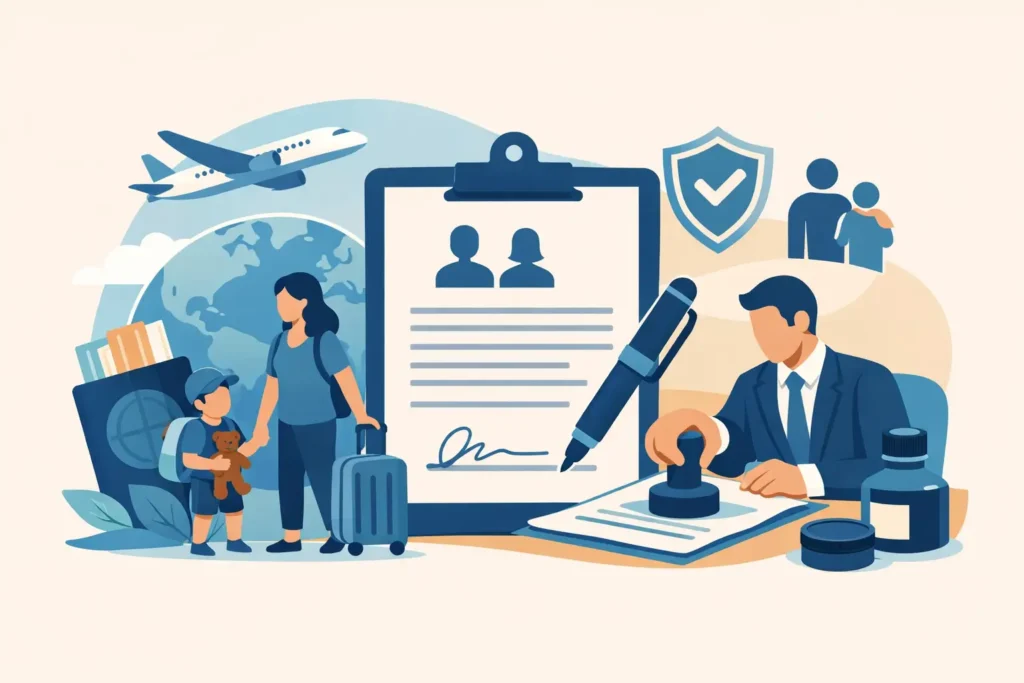
A missed signature can turn airport check-in into a long, stressful conversation. If a child is traveling with one parent, with relatives, or with a school group, travel consent letter notarization is often the step that helps prove the trip is authorized and reduces the chance of delays at the border.
Parents usually start asking about this document a few days before departure, which is later than ideal. Airlines, border officers, and foreign authorities do not all apply the same standards in exactly the same way. That is why the safest approach is to prepare a clear consent letter, sign it properly, and have it notarized before travel.
What travel consent letter notarization does
A travel consent letter is a written statement from a parent or legal guardian allowing a minor child to travel without them, or without both of them. Travel consent letter notarization adds an extra layer of credibility by confirming the identity of the person signing the document and witnessing the signature.
That matters because border officials are trying to prevent child abduction, custody violations, and unauthorized international travel. A notarized letter does not guarantee entry into another country, but it can help show that the child is traveling with permission. In real terms, it often means fewer questions, less suspicion, and a smoother crossing.
For domestic trips, some parents skip notarization. Sometimes that works fine. But if the child is flying alone, traveling with a non-parent adult, or crossing an international border, a notarized consent letter is the more cautious choice.
When you may need a notarized consent letter
The most common situation is when one parent is traveling alone with a child. Another common case is when grandparents, family friends, coaches, or school staff are accompanying the child. Divorced or separated parents also frequently need this document, especially when one parent has scheduled travel time but the other parent still shares legal custody.
International travel is where this document matters most. Many countries strongly recommend or expect written parental consent for minors traveling without both parents. Even when the destination country does not formally require it, the airline or border officer may still ask for it.
There are also situations where one parent cannot sign. If a parent has sole legal custody, is deceased, cannot be located, or has had parental rights limited by court order, the traveler may need supporting documents instead of, or in addition to, a consent letter. This is where people get into trouble by assuming one form covers everything. Sometimes it does. Sometimes you also need a custody order, death certificate, or court documentation.
What to include in the letter
A good consent letter is clear, specific, and easy to verify. It should identify the child by full legal name and date of birth, name the parents or guardians, and state who the child is traveling with. It should also include the travel dates, destination, and a brief statement giving permission for the trip.
Contact information is just as important as the permission itself. The letter should include phone numbers and addresses for the signing parent or guardian, and often for the accompanying adult as well. If the child is traveling internationally, passport details may also be included when available.
Vague letters create problems. A note that says, “I give permission for my son to travel” is not enough in many situations. Officials want to know who signed, who is accompanying the child, where the child is going, and for how long. A document that answers those questions clearly is much more useful than a generic one-page note.
Why notarization is often the safest choice
Some people ask whether they can just sign the letter at home. Technically, a plain signed letter may be accepted in some circumstances. The issue is not whether it exists. The issue is whether anyone reviewing it trusts it.
Notarization helps because the signer appears before a notary, shows valid identification, and signs the document in the proper way. That makes the letter more credible to airlines, border agencies, schools, and travel providers. It shows that the signature was not casually added later and that the person signing was identified at the time.
There is also a practical benefit. When travel plans are tight, the last thing a parent wants is to be pulled aside and asked to justify a document that looks informal or incomplete. Notarization cannot remove every possible question, but it can reduce avoidable friction.
Travel consent letter notarization for divorced or separated parents
This is where details matter. If parents are divorced or separated, a consent letter may still be needed even if the traveling parent normally handles day-to-day care. Legal custody and parenting time are not always the same thing.
If both parents share legal decision-making authority, many travel situations call for consent from the non-traveling parent. If one parent has sole custody, supporting court paperwork may be enough, but carrying both the court order and a notarized letter can still be the cleaner option if circumstances allow.
Where conflict exists, do not guess. A notary can verify identity and witness signatures, but a notary does not decide custody rights or override court orders. If the parenting arrangement is complicated, the travel document should match the legal reality. That may mean reviewing the custody order before the letter is prepared.
What to bring to the notary
The appointment is usually simple if you arrive prepared. The signing parent or guardian should bring valid government-issued photo ID. The consent letter should be ready but unsigned, since the signature usually needs to happen in front of the notary. If the child has a passport, travel itinerary, or supporting custody documents, bring those too if the details need to be checked against the letter.
Names should match across documents. If a passport says one thing and the letter says another, even a small discrepancy can raise questions. This includes hyphenated names, middle names, and spelling variations.
If more than one parent must sign, ask in advance whether both need to appear at the same appointment or whether separate notarization can be arranged. Timing matters here, especially for families coordinating around work schedules, shared custody, or last-minute departures.
Common mistakes that cause delays
Most problems come from being too casual. Parents use an old template, forget travel dates, leave out the accompanying adult’s full name, or sign before meeting the notary. Others assume a travel consent letter is enough when they also need supporting custody documents.
Another common issue is waiting until the day before travel. If anything is missing, there is very little room to fix it. The smart move is to prepare the letter early enough to review names, dates, destinations, and signatures without rushing.
International travel adds another layer. Some destinations may expect extra authentication or country-specific wording. Not every trip requires that level of formality, but some do. If the travel is cross-border and time-sensitive, it is worth confirming what the airline or destination authority may ask to see.
Mobile notarization makes this easier
Families dealing with travel paperwork are usually juggling far more than one document. There may be passports, custody papers, school forms, visas, or last-minute itinerary changes. A mobile notary service helps by bringing the appointment to your home, office, hospital, or another convenient location, which is especially useful when schedules are tight or multiple family members need to sign.
That convenience is not just about comfort. It can be the difference between handling the paperwork properly and rushing through it. For parents balancing work, shared parenting logistics, and a departure deadline, faster access to notarization reduces mistakes.
For travelers in Calgary and across Alberta, Notary2U often helps in exactly these situations – urgent, practical, and time-sensitive. The goal is simple: get the document signed correctly, notarized properly, and ready for travel without adding more stress to the process.
Does notarization guarantee border acceptance?
No, and this is worth being clear about. A notarized consent letter supports the child’s travel documents, but it does not force an airline or border agency to approve travel. Officers can still ask questions, request supporting records, or review custody issues.
That said, a properly prepared notarized letter usually puts families in a much stronger position than an unsigned note or a vague statement typed the night before. It shows planning, legitimacy, and respect for the rules around minor travel.
If a child is traveling without both parents, the best approach is not to ask what is the bare minimum. Ask what will make the trip easier to explain and less likely to be delayed. A well-prepared consent letter, notarized before departure, is often the answer.