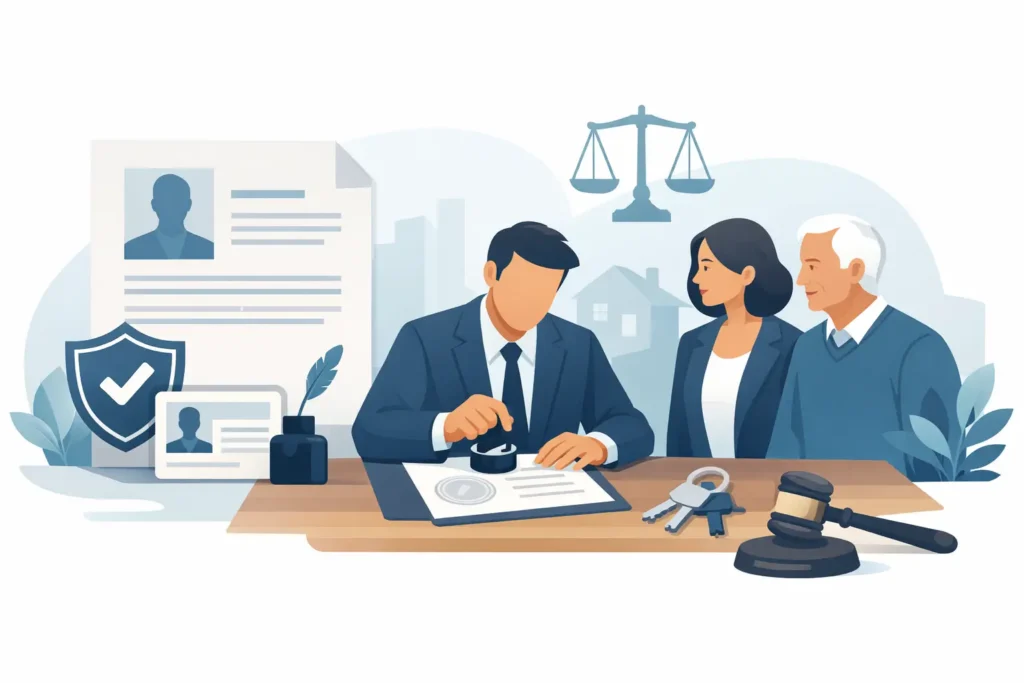
A power of attorney often gets signed during stressful moments – after a diagnosis, before travel, during a real estate closing, or while helping an aging parent get their affairs in order. That is exactly why power of attorney notarization matters. If the document is not signed correctly, banks, land title offices, healthcare providers, or other institutions may reject it when you need it most.
The good news is that the process is usually straightforward when you know what to expect. The challenge is that people often assume every power of attorney must be notarized, or that any signed copy will do. In reality, the answer depends on where the document will be used, what authority it grants, and which institution will rely on it.
What power of attorney notarization actually means
Power of attorney notarization is the act of having a notary public verify the identity of the person signing the document and witness that signature. The notary also confirms that the signer appears willing and aware of what they are signing. After that, the notary completes the required notarial certificate and applies their seal or stamp.
This does not mean the notary is approving the legal terms of the document or giving legal advice about whether the power of attorney is drafted properly. A notary is confirming the execution of the document, not rewriting it or choosing the powers included in it.
That distinction matters. A power of attorney can still be poorly drafted even if it is properly notarized. On the other hand, a well-drafted power of attorney can still become a problem if it is signed incorrectly.
Does a power of attorney need notarization?
Sometimes yes, sometimes no. That is where many people get tripped up.
In some cases, the law where the document will be used requires notarization. In other cases, notarization is not strictly required by statute, but the receiving institution still expects it before accepting the document. Financial institutions are especially known for setting their own review standards. A bank may reject a power of attorney that looks informal, lacks proper witnessing, or does not meet their internal compliance rules.
If the document will be used for real estate, cross-border matters, or official filings, notarization is even more likely to be required. If it will be presented outside your home state or outside the country, extra authentication steps may also come into play.
The practical answer is simple: do not guess. Check the governing law for the document and confirm the acceptance requirements of the institution that will rely on it.
Why institutions care about notarization
A power of attorney gives one person serious authority to act for another. That can include handling money, signing contracts, managing property, or dealing with legal and administrative matters. Because the stakes are high, institutions want stronger proof that the document is genuine.
Notarization helps reduce obvious risks. It creates a formal record that the signer appeared before a notary, showed identification, and signed the document voluntarily. For the organization reviewing it later, that adds a layer of trust.
It is not foolproof. Notarization does not eliminate fraud or family disputes. But it does make it easier for a bank, registry, or other third party to feel comfortable accepting the document.
Common situations where notarization is requested
Financial powers of attorney are the most common example. If an agent will deal with bank accounts, mortgages, pensions, or investment matters, notarization is often expected even when the law is flexible.
Real estate transactions are another major category. If the agent may sign deeds, transfer documents, or land-related paperwork, the execution requirements are often stricter.
Healthcare powers of attorney or advance directives can be different. Some jurisdictions allow witnesses instead of notarization. Others accept either. The right approach depends on the form being used and where it will be presented.
Documents intended for use outside the United States may require more than basic notarization. If a foreign authority will review the power of attorney, the document may need authentication or apostille processing after notarization.
What to bring to a power of attorney notarization appointment
Start with the unsigned document. In most cases, do not sign it ahead of time unless you have been specifically instructed to do so and the notarial act allows it. The notary usually needs to witness the signature.
Bring valid government-issued identification for the person signing the power of attorney. The name on the ID should closely match the name on the document. If there are differences, even small ones, ask about them before the appointment so you do not lose time.
If witnesses are required, make sure that piece is handled in advance. Some powers of attorney need witnesses in addition to notarization. A notary is not automatically a witness, and a witness cannot always serve as the notary. Those roles depend on local rules and the type of document.
The signer must be present, alert, and able to understand what they are signing. If capacity is in question, the notarization may need to be postponed. This can be difficult for families dealing with illness or urgent care decisions, but a notary cannot ignore concerns about comprehension or willingness.
What happens during the appointment
The appointment itself is usually quick. The notary reviews the document enough to identify the notarial act required, confirms the signer’s identity, and checks that the signer appears willing and aware.
Then the signer signs the document in the notary’s presence, unless the document was previously signed and the notarial act allows acknowledgment of an existing signature. The notary completes the certificate and applies the notarial seal.
If the document is missing pages, has blank spaces in key sections, or lacks the proper notarial wording, the process may stop there. That is one reason mobile and same-day service can be helpful. If something needs to be corrected, it is easier to deal with it quickly rather than finding out after hours of back and forth.
Mistakes that cause delays
The most common issue is bringing the wrong version of the document. People often print a draft, mark up pages by hand, or show up with an incomplete packet. If signature pages are separated from the rest of the document, that can also create problems.
Another frequent issue is assuming the signer can authorize someone else to appear in their place. For notarization, personal appearance is generally required. If the principal cannot communicate clearly or is not competent at the time of signing, the document may not be notarizable.
Families also run into trouble when they wait too long. A power of attorney works best as a preventive step, not a last-minute scramble after capacity has already been lost. Once that threshold is crossed, other legal options may be necessary, and they are usually slower and more expensive.
Mobile notarization can make the process easier
For a power of attorney, convenience is not just a nice extra. It can be the difference between getting the document completed properly and letting it sit unfinished.
Many signers are older adults, patients in care settings, busy professionals, or family members coordinating multiple people at once. Meeting at a home, office, hospital, or care facility often makes more sense than expecting everyone to travel. That is especially true when witnesses or family members need to be present, or when timing is urgent.
This is where a service-focused provider like Notary2U fits naturally. Mobile appointments, seven-day availability, and quick turnaround remove a lot of the friction that usually slows down important document signing.
If the document will be used across borders
Cross-border use adds another layer. A power of attorney that is acceptable in one state may not be accepted automatically in another country. The receiving authority may ask for notarization in a specific format, certified translation, or further authentication.
That does not mean the document is invalid. It means the receiving office has its own compliance process. If the document will be used abroad, it is worth confirming those requirements before the appointment rather than trying to fix the paperwork after it has already been signed.
The safest approach
Power of attorney notarization is less about formality and more about making the document usable when it counts. A properly signed and notarized power of attorney gives institutions fewer reasons to reject it and gives families fewer problems to solve later.
If you are preparing one, think beyond the signature itself. Ask where the document will be used, whether witnesses are needed, whether the receiving institution has its own standards, and whether the signer is still able to execute it clearly. Getting those details right early is usually faster, cheaper, and far less stressful than trying to fix a rejected document at the worst possible moment.
When the paperwork carries real authority, the goal is not just to get it signed. The goal is to get it accepted.